
WOOD ANEMONE
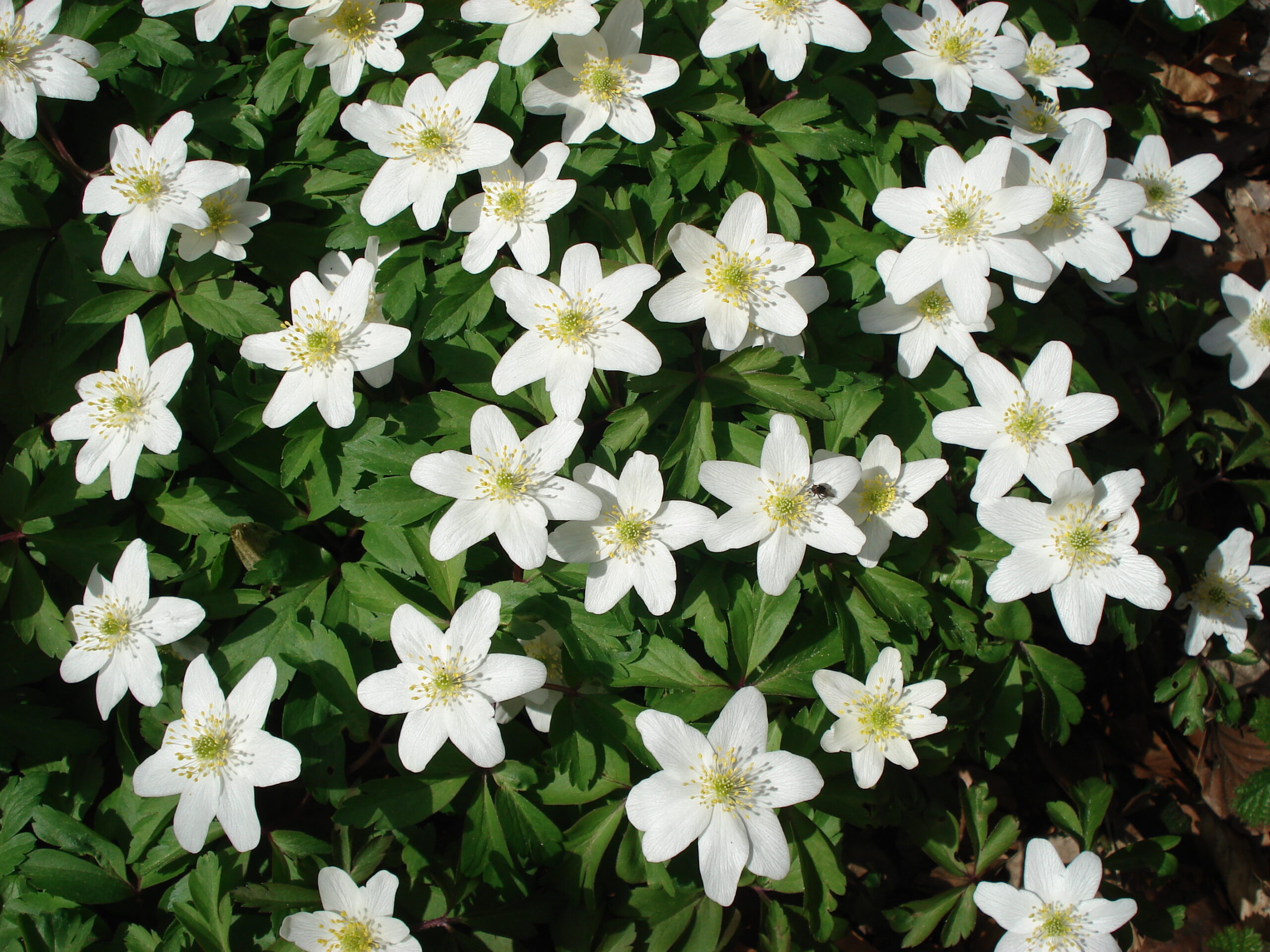
A spring delight, the wood anemone grows in dappled shade in ancient woodlands. Traditional management such as coppicing can help such flowers by opening up the woodland floor to sunlight
Scientific name:
Anemone nemorosa
When to see:
March to may
About:
The Wood anemone is a pretty spring flower of ancient woodlands, and is also planted in graveyards, parks and gardens. Its white flowers bloom between March and May, before the canopy becomes too dense, but its seeds are mostly infertile and it spreads slowly through the growth of its roots.
How to identify:
An easily recognisable flower, the wood anemone is a low-growing plant, with six to seven large, white or purple-streaked ‘petals’ (which are actually its sepals), surrounding a cluster of distinctive yellow anthers. Its leaves are deeply lobed and it has a thin, red stem.
Distribution:
Widespread.
Did you know?
The wood anemone is named after the Greek wind god, Anemos, who sent his namesakes, the anemones, in early spring to herald his coming. This legend gives the flower its other common name of ‘Windflower’.
The Wildlife Trusts manage many woodland nature reserves sympathetically for the benefit of all kinds of wildlife. A mix of coppicing, scrub-cutting, ride maintenance and non-intervention all help woodland wildlife to thrive.