
Candlesnuff fungus
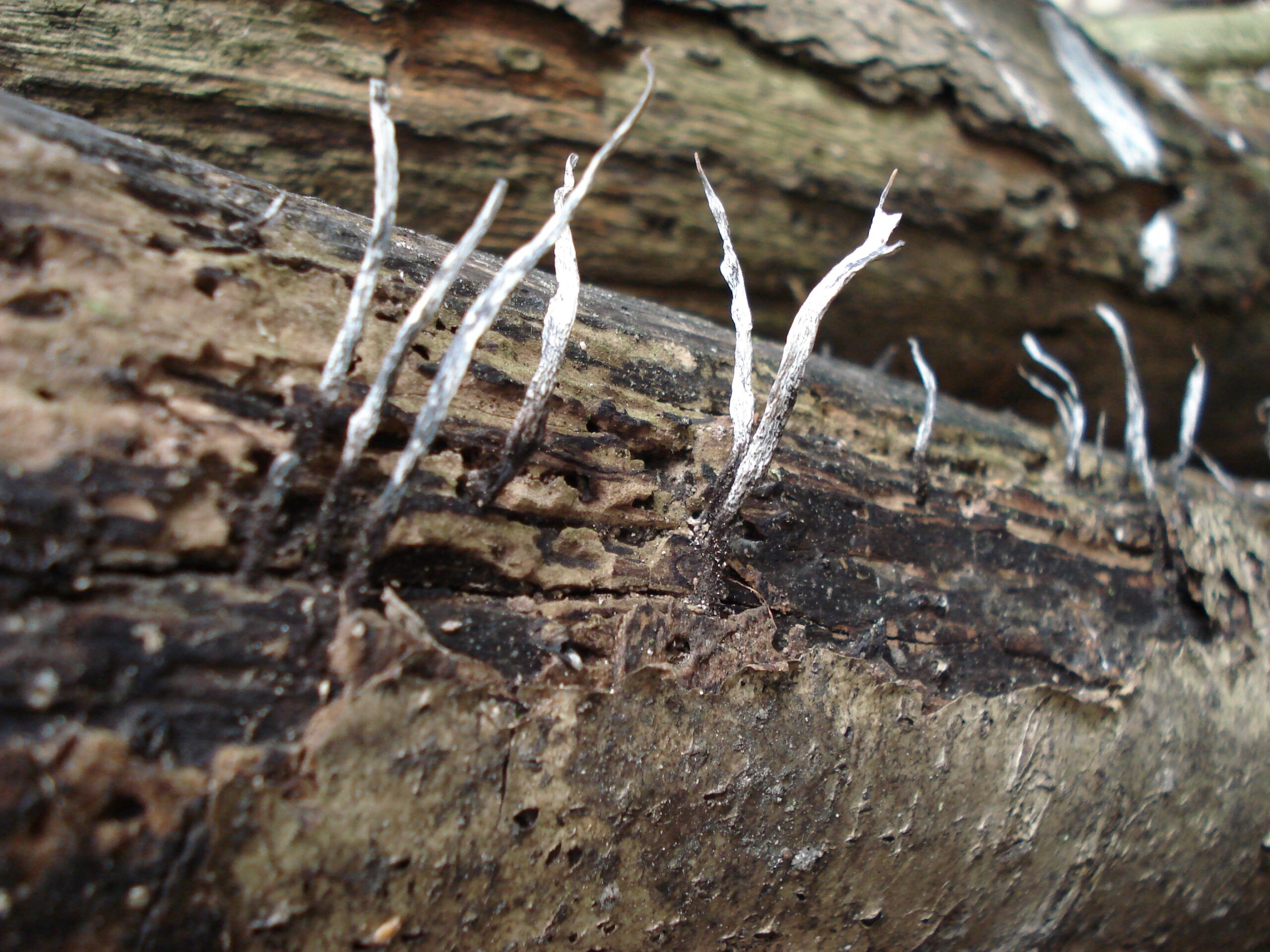
The candlesnuff fungus is very common. It has an erect, stick like or forked fruiting body with a black base and white powdery tip. It grows on dead and rotting wood. Stem height: 1-6cm
Scientific name:
Xylaria hypoxylon
When to see:
January to December
About:
The candlesnuff fungus, also known as the ‘Stag’s Horn’, has an erect, simple or forked fruiting body with a downy stalk. It grows in groups on dead and rotting wood, and can be found on stumps and branches of all sorts of trees. Fungi belong to their own kingdom and get their nutrients and energy from organic matter, rather than photosynthesis like plants. It is often just the fruiting bodies, or ‘mushrooms’, that are visible to us, arising from an unseen network of tiny filaments called ‘hyphae’. These fruiting bodies produce spores for reproduction, although fungi can also reproduce asexually by fragmentation.
How to identify:
The fruiting body of the candlesnuff fungus is simple, erect and stick-like. It is black and hairy at the base of the stem and powdery white at the tip. The stem can become flattened and branched in a fork like an antler, hence the other name of ‘Stag’s Horn’.
Did you know?
The candlesnuff fungus relies on dead wood, but the importance of this habitat for wildlife is often overlooked: to keep a place ‘neat’, mature and ageing trees may be removed and fallen dead wood cleared away. By keeping dead wood in your garden, you can encourage all kinds of fungi to grow, in turn, attracting the wildlife that depends upon it.